IT´S FREE AND WITHOUT OBLIGATION! You have nothing to lose and everything to gain! There is NEVER any obligation whatsoever and NO CREDIT CARD REQUIRED.
FULL ACCESS TO WOMEN´S PROFILES AND FEATURES! You´ll have full FREE access to all of the women´s profile information including all available photos and other enhanced features to assist you in exploring your opportunities.
START RECEIVING LETTERS FROM WOMEN! Our real, live, local Matchmakers go to work for you immediately – at NO COST - matching your profile to potential women in their city or region! Most men begin receiving letters from qualified women within a day or two – sometimes even just hours.
OPPORTUNITY TO VIEW WOMEN´S VIDEOS! You´ll have the opportunity to view the women´s profile videos (if available) produced by our local staff and found exclusively here!
YOU ARE IN CONTROL! YOU are in control. YOU choose who, how and IF you want to communicate with a woman. NEVER any obligation!
CUSTOMER SERVICE THAT IS UNMATCHED Questions? Concerns? We invite you to call us or otherwise contact us anytime! Our contact information is at the bottom of nearly every page.
Set Up Your Account Here
Is there any REAL reason to wait? It's FREE, instant and without obligation
to register NOW!
It’s the first step in possibly the most rewarding romantic adventure of your lifetime!
There are fewer joys in life greater than exploring cuisines from
different cultures around the world. For many people, it’s their
raison d’être—the thing they live for.
If you plan on traveling abroad to visit a new country, then you have to
make it a point to explore food and go for new cuisine experiences.
There are several countries that are
cultural melting pots
— countries with high levels of immigration — that make great places to
find dishes of different cultures.
However, those dishes will often be markedly different from what can be
found in native countries. This is because those immigrant populations
have to substitute the proper ingredients from what’s available or
affordable.
Discovering food is a pillar of traveling. And for many people, it’s
their sole motivation. Some tourists find the nearest fast food
restaurants or they don’t stray too far from their hotel, which is going
to serve fare to which the tourists are accustomed. You don’t need an
international cuisine module. You just need to do some exploring.
So what if you want to explore cuisine all over the world? What sort of
fare can you expect to find when you deplane in various countries?
And what about dietary restrictions? Can Philippine-bound travelers with
animal-free diets easily find vegan Filipino food? And what about vegan
food, and food in general, in other countries? What can a traveler
expect to find on their plate or bowl or banana leaf?
In this article, let’s sample the experience of discovering new dishes,
hopefully to whet your appetite as you plan on your upcoming vacation.
If you’re exploring cuisines, the food of China is an excellent
starting point with their broad array of dish types.
Exploring Cuisine in China
If your goal is to explore Asian food, start with Chinese food. Many
people all over the world are going to be familiar with this since there
are many Chinese restaurants all over the world. It’s a staple of
takeout. So, what kind of food can be found in China?
You’re probably visualizing fried rice, steamed dumplings, a variety of
noodles, orange chicken, and fortune cookies - which are actually not
Chinese and originate in the United States with roots in Japan.
For the most part, you’d be right to visualize such food when you think
about the food in China. But there are ways more than what you normally
order for takeout. Take snacks, for example. People in China can get a
little peckish in between meals, so they have to nosh on something. So
what snacks are popular in the Middle Kingdom?
Crunchy rice rolls - These are rolls of crispy rice
glazed with syrup and rolled in sesame seeds.
Pineapple buns - Despite the name, no pineapples
are used in making this. Instead, this is bread that is fried golden
brown and is sugary and crunchy. The name comes from its physical
resemblance to the fruit.
Stinky tofu - You’ve probably heard of this
acquired taste. This is deep-fried fermented tofu that can be served
hot or cold. The worse this snack smells, the higher the quality of
the tofu.
While these are snacks, you also have food for the main course. What can
you expect when you sit down for a proper meal?
Peking duck - Considered one of the national dishes
of China, Peking duck is characterized by its thin and crispy skin.
This is not eaten like other birds, but is instead sliced into thin
pieces and eaten with pancakes, bean and/or soy sauce, and mashed
garlic.
Kung Pao Chicken - This dish is popular in and out
of China and is a staple of Chinese restaurants all over the world.
This is made from diced chicken, dried chili, cucumber, and fried
nuts - either peanuts or cashews. The Western variant popular in
China isn’t as spicy and features a more sweet and sour taste.
Xiaolongbao - If you haven’t had this yet, then
you’re missing out. These are dumplings filled with soup and they’re
not eaten like regular dumplings. Bite off a small corner, drink the
soup, and then eat the rest of the dumpling.
A trip to Thailand will set your tastebuds aflame.
Tasting Thai
Moving on from China, what about Thailand? What kind of food can add
another smile to a land that’s supposedly full of them? Well, a lot of
non-Thai people are going to be familiar with Thai cuisine because of
how popular it is all over the world.
When it comes to snacking, the Thais have tastes that range from spicy
to sweet.
Thai mango rice - Mangoes served with sticky, sweet
rice. Probably Thailand’s most iconic snack.
Fried insects - Silkworms, bamboo works,
grasshoppers, and crickets that are washed and deep fried.
Khanom Buang - Thai crepes that are shaped like
tacos and filled with something sweet and savory. Topped with
strands of egg yolk.
As for meals, Thai tastebuds tend for things that are spicier than what
a lot of Westerners are used to.
Thai chicken satay - Chunks of chicken marinated in
Thai paste, skewered, and then grilled or boiled. Served with peanut
sauce.
Drunken noodles - Spicy noodles are popular as a
late-night dish. Spice can be toned and made vegetarian or with
shrimp or chicken. It’s a late-night Asian comfort food for
partygoers and other revelers.
Guay Teow - Rice or egg noodles made with beef,
pork, or chicken. Vendors also add wontons or meatballs into the
brother. Topped with condiments like sugar, dried chili, lime juice,
or fish sauce. Possibly the most popular of all of Thailand’s noodle
dishes.
Filipino food will give you sweet and savory in the same bite.
Filipino Food
Now, on to Thailand’s fellow Southeast Asian country, the Philippines.
Filipinos have a sweet tooth. Even the food that should be savory, like
a cheeseburger, will use a sweet mayonnaise-style sauce. Banana ketchup,
which is sweeter than tomato ketchup, is also prevalent in the country.
Dumplings - Because of the Chinese influence in the
country, dim sum has become quite popular. Dumplings, in particular,
have become a popular street food staple.
Turon - This is made from slices of banana coated
in brown sugar and then coated in lumpia wrappers. It’s a very
common street food in the country.
Dried mangoes - If you’re in the airport, you’re
likely to find these. These are essential chips but instead of
savory potatoes, it’s sweet mangoes.
But snacking isn’t the only way in which Filipino food distinguishes
itself. The main courses also have plenty to offer your palette. Do note
that most Filipino main courses are meant to be eaten with rice, hence
they are seasoned a bit saltier than you might be used to.
Lechon - The most iconic of all Filipino dishes,
this is not something that a visitor can miss. This is a roast
suckling pig. The pig is seasoned beforehand with a variety of
spices before being spit-roasted.
Native chicken - Similar to the lechon, but instead
of a pig being roasted, it’s a chicken. Keep in mind that many
native chickens in the Philippines are relatively lean, so there may
not be that much meat to go around.
Barbecue - If you’re in the Philippines, do not
miss out on their barbecue. This usually comes in the form of strips
of pork or pieces of chicken skewered on sticks and slathered in a
semi-sweet barbecue sauce.
Puso - All of the above is best eaten with puso,
rice cooked in banana leaves.
Okay, but what if you want to start exploring cuisines that are a little
closer to home? Well, Latin America is right there and is a relatively
short flight away. So, what kind of food can you find in Latin America?
For historical reasons, a lot of the cuisine found in Latin America will
have similarities to Spanish cuisine. If it’s a staple in Spain, then
it’s probably a staple of Central American cuisine.
Mexican food is meant to be enjoyed in the company of family and
friends.
Munching on Mexican Food
If you’re looking at Latin America, then it might be best to start with
Mexico. Not only does it share a land border with the United States, a
lot of the Southwest used to be part of Mexico. Not to mention many
Americans are going to be familiar with Mexican food.
Elote - This is Mexican corn. It’s a lot like the
corn you’re used to, except that it’s coated with lime and
mayonnaise before being rolled in cotija cheese and chili powder.
It’s generally a street food but has been known to feature in the
menus of high-end restaurants.
Gordita - This snack is made from corn flour
tortillas stuffed with ingredients such as meat, cheese, beans,
salsa, or guacamole. The tortillas are quite thick, which means that
they’re also quite durable. The word gordita actually means ‘little
fat one’ and the term is usually used out of fondness.
Sopes - These are discs made from fried corn dough
and topped with beans, meat, cheese, and sauce. There are different
versions of them in every state in Mexico.
Now you know about the snacks in Mexico, but what about when you want
something more filling?
Barbacoa - This braised pork dish simmers in a
mixture of chipotle, adobe sauce, cumin, oregano, lime juice, and
cilantro. The end result is flavorful and so tender that it falls
apart easily. Leftovers can be eaten in tacos, or other dishes.
Birria - This Mexican beef stew is packed with
seasonings and meat that falls apart quickly.
Pollo Asado -This dish tastes like no chicken dish
you’ve ever had before. This char-grilled fowl is served with guac
or salsa.
Arepas are a Colombian staple. Taste one and see why.
Colombian Concoctions
Going south of Mexico will eventually lead down to Colombia. You might
think that similar cultural influences from Spain would mean that the
food is the exact same, or at least close enough that there’s not much
distinction. You’d be wrong. Colombia’s cuisine is similar, but it
stands on its own.
When it comes to snacking, Colombia is no slouch. So, what are some
snacks that you can expect to find when you’re down there?
Hormiga culona - Fat-bottomed ants. The ants are
soaked in saltwater, fried, and then strained. Wings are removed by
hand. This snack can be found on street corners and paired with wine
or salt.
Arepa - Arepas are made with ground corn stuffed
with a filling. This is a pre-Colombian food and there are many
regional variations and is present throughout other countries such
as Venezuela, Bolivia, and other South American countries, which
means that there’s a whole host of Latin American flavors to
discover inside of an arepa.
Pan de queso - This bread is made from tapioca
flour, grated cheese, and fermented cassava starch, which makes it
light and voluminous.
So, that’s snacks covered. But what about main courses? How are you
going to satisfy your appetite while in Colombia?
Ajiaco - You’ve probably had chicken noodle soup at
some point. It’s a common comfort food in the United States.
Colombia’s signature chicken soup is a little different. The chicken
soup is made with potatoes, capers, cream milk, and corn. It’s also
served with rice and avocado on the side or in the soup depending on
preferences.
Bandeja paisa - This is a fairly popular dish,
especially throughout the Medellin area. It consists of rice, minced
meat, red beans, chorizo, an arepa, a fried egg, fried pork skin,
black budding, plantain, and a slice of avocado. All of this is
served on one plate. This is also the national dish of Colombia.
Pescado Frito - This is a fried fish dish served
with avocado, fries, and a bevy of other fruits and vegetables like
onions, cucumbers, lettuce, and tomatoes. The fish that is fried can
vary but popular options include red snapper, mojarra, and tilapia.
Borscht is common in Slavic countries.
Eastern European Eats
So, that’s Asia and Latin America sampled. What about another continent
or region? What about Eastern Europe? What sort of dishes can you nosh
on in Ukraine and Russia?
Snacking is important. It helps get people through the day. A lot of
cultures have a name for snacking. In places like Spain and Portugal,
it’s called merienda. In England, it’s afternoon tea.
Perepichka - If you’re looking for iconic Ukrainian
street food, then you’ve got to try this. What is it? It’s a soft
sausage encased in yeasted dough. The whole thing is then
deep-fried.
Pampushki - Small yeast buns. There are two
versions of this, one sweet and one savory. Both are made of milk,
flour, eggs, sugar, butter, oil, salt, and yeast. The sweet variant
is filled with jam, berries, fruit, or cottage cheese. The savory
version has no filling but is flavored with garlic and served
alongside borscht.
Bublik - A round, yeasted bun. Think of it as a
kind of Eastern European bagel. The story behind it is that it was
made by the Jewish population in Russia, but got its current form in
Ukraine. Often used to accompany tea or coffee.
Now that the snacks are taken care of, what about meals? You could fill
yourself up on bread, but you’re probably going to want some variety.
Luckily, Ukraine has you covered.
Borscht - A national dish of Ukraine. It’s known
for its red coloring and is made from beets, beef, cabbage, and a
variety of root vegetables. It’s also a staple of other Slavic
cultures such as Russia, Poland, and Lithuania.
Varenyky - If you’re looking for Ukrainian
appetizers, look no further than this other national dish. These are
dumplings stuffed with potatoes, ground meat, cabbage, mushrooms,
and cheese. There are also dessert variants filled with fruit and
sweet cheese. Usually served with sour cream.
Kotleta Po-Kyivsky - There’s a chance that you’ve
had this before. The name may seem unfamiliar, so you might be more
familiar with its translated name - Chicken Kyiv. Chicken breast
stuffed with butter and coated in flour, eggs, and breadcrumbs.
Usually served with vegetables and potatoes.
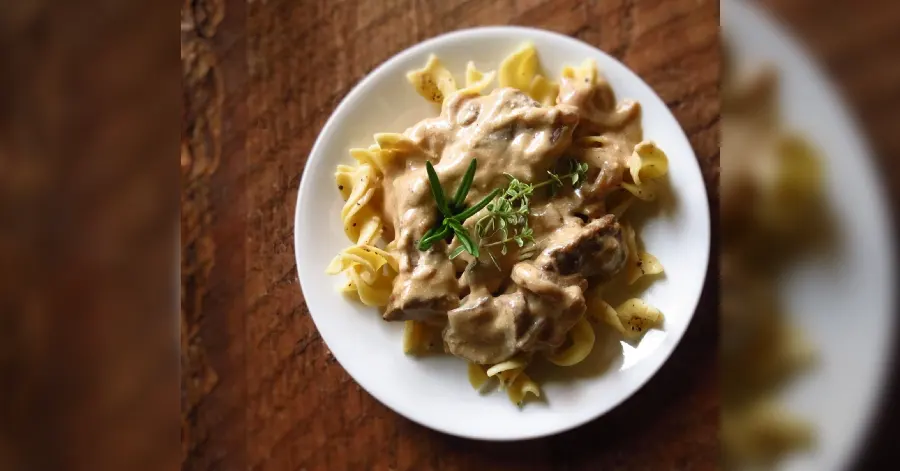
Did you know Beef Stroganoff originated in Russia?
What about another Slavic country? Is there going to be any similarity
or overlap? Yes, there might be some cultural overlap, any Russian
snacks you encounter might be similar to Ukrainian ones.
Sushki -A traditional snack, these are small rings
of sweet dough. They have a rather hard texture and are dipped into
tea to soften them. They’re also served with fruit jam or sour
cream.
Syrniki - Think of them as a cross between donuts
and pancakes and they’re filled with cottage cheese. You’ll find
them served with a variety of berry-based jams.
Pierogi - Another dumpling, the Russian pierogi is
made from baked dough stuffed with a variety of fillings. The
fillings can be fruits, meat, mushrooms, nuts, honey, or cheese.
Chebureki - This popular Russian street food is a
fried pastry filled with ground meat, onions, and spices. You can
find this in many food stalls, restaurants, and cafés around the
country.
That’s snacks, what about full meals? Sure, you can probably fill
yourself up with enough of the above, but Russian cuisine has a few
tricks up its sleeves.
Beef Stroganoff - There’s a story behind this
popular dish. The Russian upper class used to be incredibly fond of
Paris and a French chef working for a St. Petersburg family came up
with this dish as part of a cooking contest. The dish itself is
sauteed beef served in a sauce made with sour cream.
Kasha - This is the most popular porridge dish in
Russia and is eaten first thing in the morning. This buckwheat
porridge can be boiled in water or milk and can be served for
breakfast or as a side dish later in the day.
Shashlik - Kebabs are chunks of meat and vegetables
served on skewers. The Russian version came from tribesmen in the
Caucasus mountains and many Russian families have their own secret
recipe for the marinade that gives the meat and veggies their
flavor.
Even when limited to a few dishes in a handful of countries in a few
regions, just exploring cuisines can take a long time. Never mind the
cost of
traveling to those countries, the sheer amount of dishes and regional variations can make it all
seem daunting.
But isn’t that what makes life so amazing? How lucky would it be for you
or even someone with an extensive international cuisine background to
taste even half of the dishes in the whole world? Could it even be done
in a single lifetime? Time flies fast. So start planning your next trip
abroad and fill your itinerary with food, food, and even more food!