IT´S FREE AND WITHOUT OBLIGATION! You have nothing to lose and everything to gain! There is NEVER any obligation whatsoever and NO CREDIT CARD REQUIRED.
FULL ACCESS TO WOMEN´S PROFILES AND FEATURES! You´ll have full FREE access to all of the women´s profile information including all available photos and other enhanced features to assist you in exploring your opportunities.
START RECEIVING LETTERS FROM WOMEN! Our real, live, local Matchmakers go to work for you immediately – at NO COST - matching your profile to potential women in their city or region! Most men begin receiving letters from qualified women within a day or two – sometimes even just hours.
OPPORTUNITY TO VIEW WOMEN´S VIDEOS! You´ll have the opportunity to view the women´s profile videos (if available) produced by our local staff and found exclusively here!
YOU ARE IN CONTROL! YOU are in control. YOU choose who, how and IF you want to communicate with a woman. NEVER any obligation!
CUSTOMER SERVICE THAT IS UNMATCHED Questions? Concerns? We invite you to call us or otherwise contact us anytime! Our contact information is at the bottom of nearly every page.
Set Up Your Account Here
Is there any REAL reason to wait? It's FREE, instant and without obligation
to register NOW!
It’s the first step in possibly the most rewarding romantic adventure of your lifetime!
A Comprehensive Guide to Visas and Passports for Travelers
Before embarking on an international trip, make sure you have your
passport and necessary visas on hand.
Traveling is an adventure everyone should enjoy. We enrich our lives
when we step out of our bubbles, explore unfamiliar places, and
experience new cultures.
But while the thought of
traveling sounds fun
, it isn’t easy to do. Why is that?
First, traveling can be costly. From the plane fare and hotel
accommodations to eating out and joining group tours, a full travel
experience requires a substantial budget, often beyond what many people
can spare.
However, money isn’t the only reason traveling can be difficult. Many
countries have strict entry requirements that take time to obtain. One
of those is visas and passports.
Every traveler must have a passport. But not all passports are equal.
Depending on your country of citizenship, the kind of passport you hold
will determine whether or not you need a specific visa to a certain
country.
For example, Japan has had the world’s most powerful passport for
several years in a row. Japanese passport holders can travel to 193 out
of 227 global destinations visa-free. If you are from a developing
nation, however, your number of visa-free destination options may be
substantially lower.
In essence, the more powerful your passport, which is reliant upon your
country of citizenship, the more traveling privileges you have.
Each country has its own rules regarding visas. There are different
kinds of visas depending on your purpose.
If the country you are traveling to requires a visa, be aware that it
can take weeks to several months before you are issued a visa from the
time of application. It’s essential for you to do proper research and
prepare the requirements long beforehand. We’ll share helpful advice to
help you secure a visa.
Passports will be discussed as well. We’ll answer some frequently asked
questions about the subject for your convenience.
Visa vs. Passport: What Makes Them Different?
Visas and passports are two important travel documents tourists should
secure. Many people think they’re the same, but they’re different.
The question is, what is the difference between a visa and a passport?
Let’s go over each document thoroughly and see where their differences
lie.
What is a Visa?
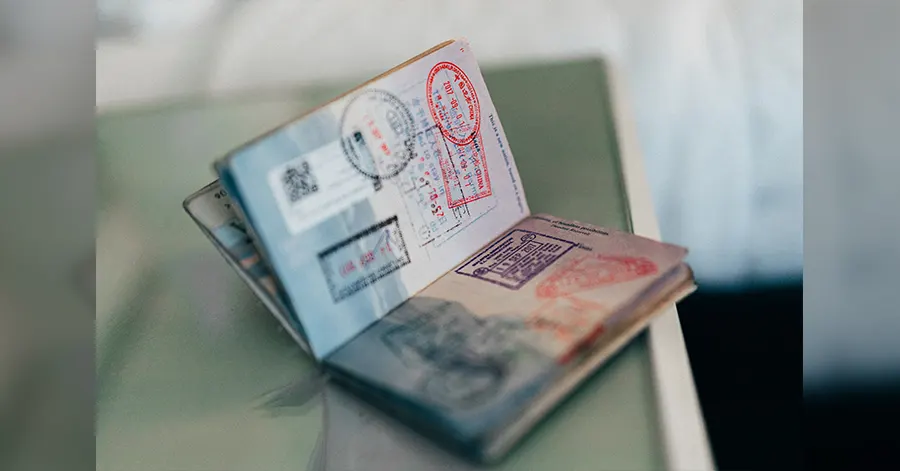
A visa is a travel document issued by foreign governments, granting
tourists entry into their nations and is usually stamped onto passports.
Visa expiry dates vary. Some only have a 10-day validity, while others
last as long as 90 days. Tourists can either avail of single- or
multiple-entry visas, depending on their preference. If you need to
visit a specific country more than once, we recommend getting a
multiple-entry one for less hassle.
Upon expiry, you can’t reuse your acquired visa to enter a country. Each
country has specific requirements to secure one, so make sure to do your
research before heading to your nearest consulate or embassy.
What is a Passport?
A passport is a travel and identification document issued by either a
person’s native country, country of citizenship, or current country of
residence. You can’t fly to an international destination and return to
your homeland without it.
The difference between a visa and a passport lies in their validity
and purpose.
Since a passport is an identification document, it contains personal
information (complete name, date of birth, and nationality) confirming a
person’s identity. It also has blank pages serving as spaces for stamps
upon entering and exiting countries.
Nowadays, passports are embedded with electric chips housing a person’s
biometric information. This innovation has made authentication more
secure.
Types of Visas
Now that we’ve figured out the difference between a visa and a passport,
let’s proceed to discuss the different visa types.
You can’t just pick a visa type on a whim. Your choice should align with
your purpose for traveling to a specific country. And with that, we’ll
enumerate some of the most common types to help you get started:
1. Student visa
Are you planning to take up a degree abroad? This visa is best suited
for that purpose because validity lasts through the duration of your
chosen program.
2. Tourist visa
If you’re traveling to a foreign country for leisure, this is the visa
you’re looking for. A tourist visa is a short-term one, ranging from 30
to 90 days.
You can apply for a tourist visa for a specific country as many times as
you wish, provided that the consulate or embassy approves your
application. Just don’t apply for jobs while you’re on this visa or risk
committing immigration violations.
3. Work visa
Do you have a job waiting for you abroad? If so, you should work on
getting this visa as soon as possible. Embassies and consulates usually
issue this type for long-term purposes, lasting between one to four
years. Its validity can have extensions, depending on your employment
contract.
4. Business visa
Are you visiting a country for commercial or entrepreneurial purposes?
Get a business visa. Do note that this doesn’t allow you to work a
full-time job while you’re abroad.
Acing Your Visa Application
Applying for visas is a rigorous process. Not only do you have to pay
fees and submit documents, but you’ll need to go through an
(intimidating) interview as well.
To ensure your visa applications get approved, make sure to gather and
fulfill all the requirements beforehand.
Visa applications can be scary, but they can be conquered. Here are some
tips you may need to pay attention to for a successful shot at approval:
Don’t skip any of your required documents
Some embassies may have a degree of leniency toward documents, but that
doesn’t mean you should be complacent! Many embassies expect applicants
to
present themselves fully prepared.
It’s best to submit ALL of your required documents at once to be on the
safe side. Appointments are hard to book, so don’t waste embassies’ time
and give them a reason to reject your visa application by showing up
unprepared.
Have sufficient funds
Every embassy expects applicants to have enough money to fund
themselves. If you don’t have enough money for your trip, they’ll have
their suspicions. Submit documents like proof of employment, payslips,
and tax returns to strengthen your case.
If you believe you have subpar financial standing, adding a sponsor to
your visa application helps. Sponsors can range from family members to
partners. Provide evidence confirming your relationship with your
sponsors and the reason for sponsorship.
Provide evidence that you won’t overstay
Don’t provide even the most indirect implication of overstaying! Stick
with your reason for applying for a specific visa and make it clear that
you plan to go home upon expiry.
Submit documents showing strong ties compelling you to go home. Examples
include a certificate of employment (for employed folks) or an approved
letter stating your leave of absence from a college or university (for
students).
Now that we’ve thoroughly discussed visas, let’s move on to passports.
As we pointed out earlier, a passport is an important travel document
because it serves as your identification. Airports won’t allow you to
get through their check-in counters and security checkpoints if you
don’t have one with you. You can’t even board a plane if you fail to
bring it.
With that said, we’ll discuss the different passport types to give you a
clue on what to apply for. We’ll also answer some frequently asked
questions for your clarification.
Types of Passports
Your passport may grant you additional privileges and visa-free
international travel based on your country of origin.
These are some common passport types in most countries:
Regular/tourist passport
The regular passport is one of the most commonly issued ones. Most
tourists apply for a regular/tourist passport because it does its job of
letting people travel internationally. Its validity depends on the
country where it’s issued.
Official passport
This passport type is for government officials and people traveling
abroad on official business. Compared to regular passports, they have
shorter validity, which, again, depends on the country of issuance.
They’re also not allowed for
personal or leisure trips.
Diplomatic passport
This type is for people performing diplomatic duties on behalf of their
home countries and foreign service officers. Going by its name, a
diplomatic passport is only valid for use on diplomatic assignments.
Holders should return them once they’ve completed their duties.
Frequently Asked Questions (FAQs)
Can you smile in your passport photo?
Yes, you can smile when your passport photo is taken. Just make sure to
open your eyes and close your mouth while doing so.
Can you wear glasses in a passport photo?
No, you should take your glasses off when taking your passport photo. If
you’re not allowed to remove them for medical reasons, you should
present a signed statement from your doctor with your passport
application.
Can you wear earrings in a passport photo?
This depends on the foreign ministry or issuing agency. Some may allow
earrings, provided that they are small in size (like studs, for
example).
We hope our guide will help you differentiate between visas and
passports and recognize their importance. Best of luck with your
applications!